A warning light is a starting point, not a parts-shopping list. Modern vehicles can store fault codes when a sensor fails, a wiring connection is poor, or another system causes readings outside the expected range. The same symptom may have several possible causes.
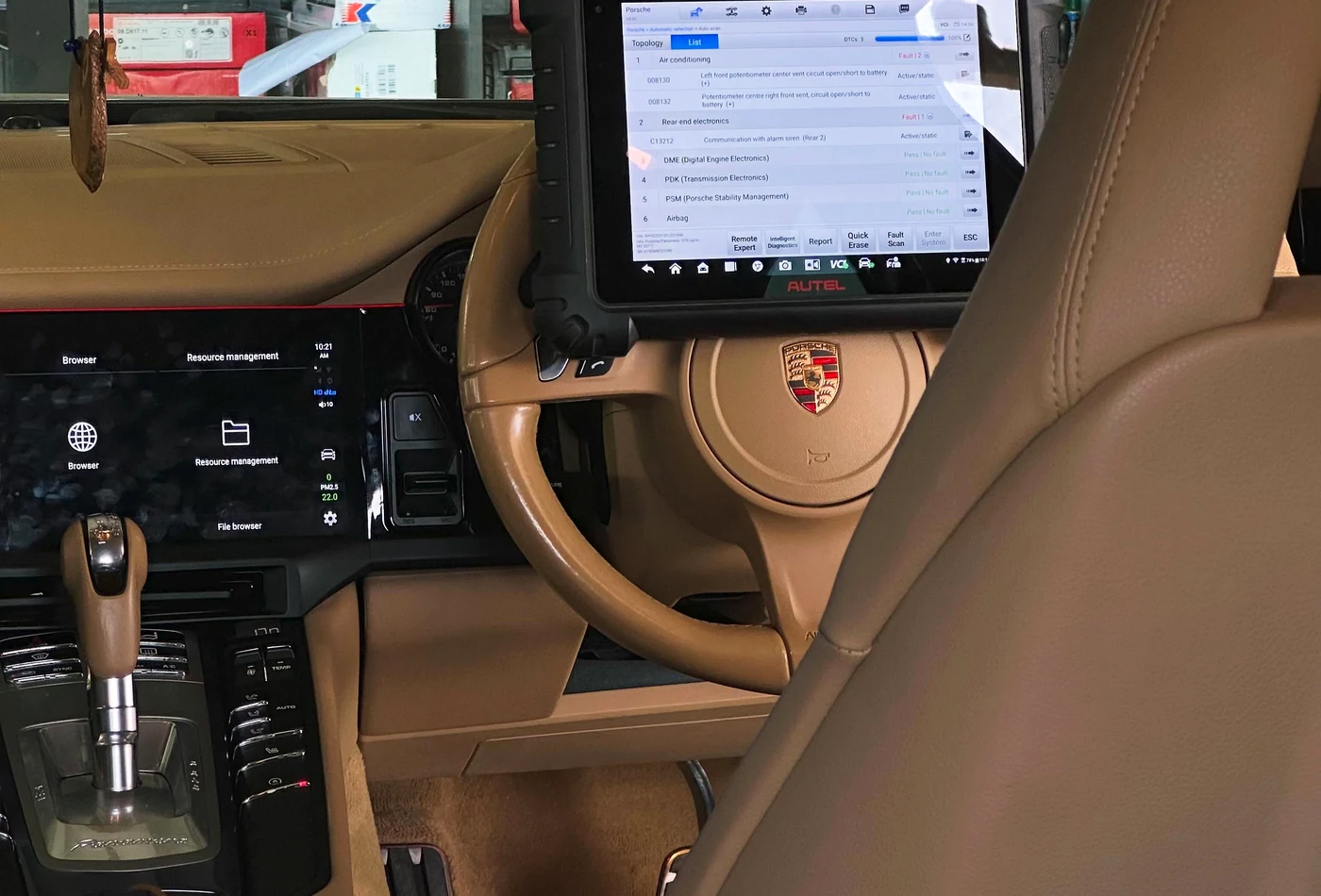
A responsible diagnostic process starts with the driver’s description: when the fault happens, what changes when the engine is hot or cold, and whether it happens during acceleration, braking or at idle. A technician then checks stored codes, freeze-frame information and live data. Depending on the fault, that may be followed by voltage measurements, wiring tests, pressure measurements, smoke leak testing or mechanical checks.
Replacing a part before confirming it is faulty can waste money and hide the real problem. A well-documented diagnosis helps prioritise repairs and explains which tests justify the recommended work.
At A.Markou Garage, we aim to locate the underlying cause and discuss the recommended repair before replacing unnecessary components.
This article provides general information, not a substitute for an in-person vehicle diagnosis. Always follow your manufacturer’s guidance and safety recommendations.