A noticeable whistle, loss of acceleration, black smoke on a diesel or a boost-pressure fault often raises concern about the turbocharger. But these symptoms can come from intake restrictions, split charge-air hoses, exhaust leaks, actuator or control problems, and fuel or airflow faults—not just damaged turbo bearings.
First, describe the noise
A mild whistle may be normal for some turbocharged engines, particularly after intake or exhaust changes. A sudden loud siren-like whine, scraping sound or noise accompanied by heavy smoke and power loss requires prompt inspection. Avoid hard acceleration until a possible mechanical problem has been assessed.
Common reasons for low boost
- Charge-air leaks: intercooler hoses, clamps, cracked plastic pipes or intercooler damage can release compressed air.
- Turbo control problems: vacuum leaks, control solenoids, sticking mechanisms or actuator faults can affect boost regulation, depending on design.
- Sensor information: incorrect MAP/MAF readings, wiring faults or software control limits can alter the boost target.
- Air or exhaust restrictions: blocked intake filters, exhaust-side restrictions or leaks can reduce performance.
- Mechanical turbo failure: damaged compressor or turbine components may produce unusual noise, poor boost and oil-related symptoms.
What should live data show?
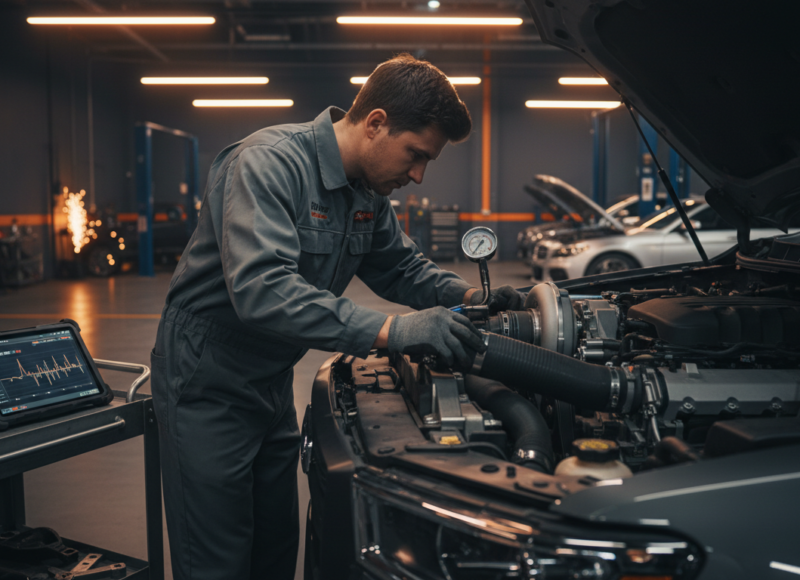
Where supported, technicians compare requested and actual boost under suitable load, along with airflow, actuator position or control duty cycle and relevant fault codes. Stationary free-revving is not a reliable way to judge turbo output because there is little engine load and boost demand may be limited.
Physical tests that matter
Visual inspection of intake and intercooler plumbing, a controlled leak test and checks of vacuum or electronic actuator operation can be valuable. If the turbo is suspected, qualified inspection of shaft play, wheel damage and oil contamination may be appropriate. Always follow safe workshop procedures around hot and rotating components.
Could a remap be involved?
Changes to boost targets or torque demand can place extra stress on an existing weak hose, clutch or turbo system. But a vehicle that was remapped months ago may also develop an unrelated problem. Diagnosis should establish what failed rather than automatically blaming or excluding the software.
Bottom line: Measuring the system before replacing the turbo can save substantial expense.
Need help diagnosing your vehicle?
A.Markou Garage in Paralimni focuses on locating the cause before recommending repairs. Contact us or send a WhatsApp message with your car’s make, model, year and symptoms.
This article provides general information, not a substitute for an in-person vehicle diagnosis. Always follow your manufacturer’s guidance and safety recommendations.