
An ABS or traction-control warning light is a signal that the car may have reduced anti-lock braking, stability or traction-management capability. Conventional hydraulic braking may still work, but the assistance functions should not be assumed available. Drive carefully and arrange diagnosis; if braking performance or pedal feel is abnormal, stop when safe and seek recovery.
ABS and stability control work together
Anti-lock braking uses wheel-speed information to help prevent wheel lock during braking. Electronic stability control may also use steering angle, yaw and other inputs to compare intended and actual vehicle motion. A fault in one shared signal can illuminate multiple warning lamps.
What are the common causes?
- Wheel-speed sensors: damaged sensors or magnetic encoder/tone ring issues can produce incorrect signals.
- Wiring and connectors: broken conductors, corrosion or intermittent open circuits near the wheel.
- Tyres and wheel fitment: substantial rolling-radius differences or incorrect tyre sizes can sometimes affect plausibility.
- Steering-angle or yaw inputs: calibration or sensor issues may affect stability-control calculations.
- Module supply or hydraulic faults: fuse, ground, ABS module, motor or valve problems require targeted confirmation.
What does a proper diagnosis look like?
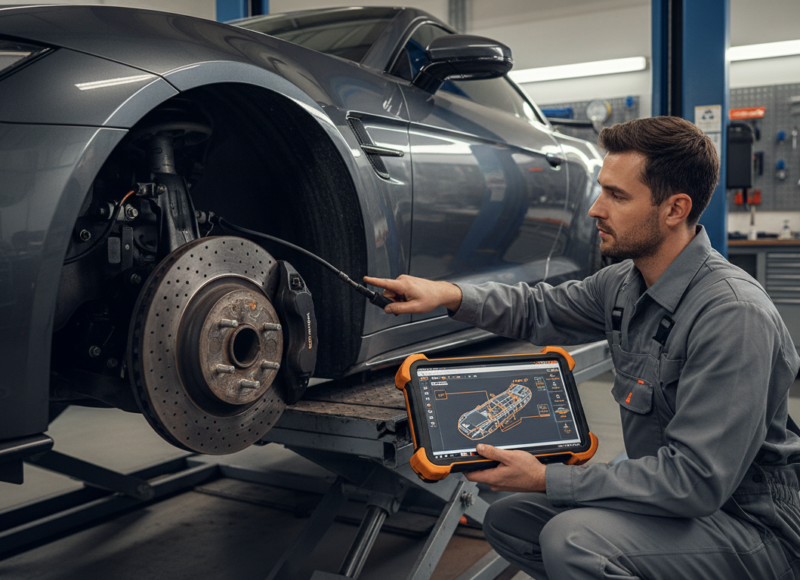
Reading fault memory from the ABS/ESC module is the starting point. Then technicians review live wheel-speed readings at a safe, controlled speed, examine sensor waveforms or voltage as appropriate, inspect encoder surfaces and test suspect wiring. Replacing a wheel sensor without checking the harness or magnetic ring can leave the original fault unresolved.
Do lights always mean the same problem?
No. A traction-control indicator that flashes briefly during wheel slip can be normal. A warning that stays on, particularly with an ABS fault message, needs investigation. Always consult the vehicle handbook for its specific symbols.
After repairs
Some systems require a calibration or road-test procedure after sensor, steering, suspension or module work. The correct manufacturer instructions matter because braking and stability systems are safety-critical.
Do not ignore persistent ABS warnings. Confirm which functions are affected and resolve the cause before relying on the system.
Need help diagnosing your vehicle?
A.Markou Garage in Paralimni focuses on locating the cause before recommending repairs. Contact us or send a WhatsApp message with your car’s make, model, year and symptoms.
This article provides general information, not a substitute for an in-person vehicle diagnosis. Always follow your manufacturer’s guidance and safety recommendations.